
Why Can’t I Speak Korean? 7 Reasons and How to Improve

Why Can’t I Speak Korean Even After Studying for Years? 7 Reasons and How to Improve
Have you been studying Korean for months or even years, but still struggle to understand native Korean speakers? You may know hundreds of Korean words, understand basic grammar, and read Hangul with ease. However, when a Korean person speaks to you, you cannot understand what they are saying. Even when you want to respond, you struggle to find the right words. If this sounds familiar, you are not alone. The reason you cannot speak Korean fluently may not be a lack of vocabulary or grammar knowledge. It may be that you have not spent enough time practicing Korean listening and speaking. In this article, we will explore seven reasons why you struggle to communicate in Korean and show you how to improve your Korean listening and speaking skills through daily practice with AI on DamiStudy.
1. Why Can’t You Speak Korean After Studying for So Long?
1.1. You Memorize Vocabulary but Do Not Practice Listening Enough
Many Korean learners memorize words by reading textbooks, writing vocabulary lists, and reviewing their meanings. They can recognize a word on paper but cannot understand it when a native Korean speaker says it. This happens because recognizing written words and understanding spoken Korean are different skills. In everyday conversations, Korean pronunciation can change because of sound linking, sound changes, and natural speaking patterns. As a result, spoken Korean may sound different from what you expect when reading a word. How to improve: • Listen to the pronunciation of every new word you learn. • Practice listening to the word in a complete sentence. • Repeat the sentence aloud several times. • Listen to short Korean conversations every day. Instead of only memorizing vocabulary, train your ears to recognize Korean words in natural speech.
1.2. You Study Too Much Grammar but Practice Speaking Too Little
You may understand Korean grammar patterns such as -아요/어요, -습니다, and -고 싶어요. However, when someone asks you a question in Korean, you need several seconds to think about the correct grammar before answering. This is a common problem for learners who spend most of their study time reading textbooks and completing grammar exercises. How to improve: Use the grammar you learn in real-life situations. For example: • 오늘 회사에 가요. — I am going to work today. • 점심을 먹었어요? — Have you eaten lunch? • 주말에 뭐 할 거예요? — What are you going to do this weekend? Practice saying these sentences aloud. Then change the words to create your own sentences about your life. The more you practice expressing your thoughts in Korean, the more familiar speaking can become.
1.3. You Understand Textbook Korean but Cannot Understand Native Speakers
Textbook conversations are often designed for learners. Speakers usually pronounce words clearly and speak at a manageable pace. Real conversations are different. Native Korean speakers may speak quickly, connect sounds, and use informal expressions or familiar phrases that you have not studied. That is why you might understand Korean grammar exercises but struggle to follow Korean dramas, YouTube videos, or conversations with Korean colleagues. How to improve: Try this listening practice method: 1. Listen to a short Korean conversation without reading the transcript. 2. Identify the main idea and familiar words. 3. Listen again while reading the transcript. 4. Pay attention to pronunciation and expressions you missed. 5. Listen one more time and repeat the sentences aloud. This technique helps you connect written Korean with the Korean you hear in real conversations.
1.4. You Translate Every Sentence Before Speaking
When you want to speak Korean, you may first think in English or your native language, translate each word into Korean, and then rearrange the sentence according to Korean grammar. This process makes speaking slower and can cause you to miss what the other person says next. How to improve: Learn complete expressions and useful sentence patterns instead of memorizing isolated vocabulary. For example, rather than learning only the word 괜찮다, meaning “to be okay,” practice these expressions: • 괜찮아요. — It's okay. • 저는 괜찮아요. — I'm fine. • 괜찮으세요? — Are you okay? When you encounter a familiar situation, you can use the expressions you have already practiced instead of translating every word.
1.5. You Are Afraid of Making Mistakes
Many Korean learners understand more than they can say. They hesitate to speak because they are afraid of mispronouncing words, using incorrect grammar, or embarrassing themselves. Unfortunately, avoiding speaking practice makes it harder to improve. How to improve: Start with simple sentences and focus on communicating your meaning rather than speaking perfectly. You can record your voice, listen to your pronunciation, and practice sentences that you find difficult. Remember that making mistakes is a normal part of learning a language. Consistent practice is more valuable than waiting until you feel completely ready to speak.
1.6. You Do Not Have Anyone to Practice Korean With
You may not have Korean friends, a private tutor, or enough time to attend conversation classes. Without regular opportunities to use Korean, it can be difficult to develop listening comprehension and speaking reflexes. How to improve: Create opportunities to practice Korean every day. Talk about your daily routine, describe your work, answer questions, or practice conversations with an AI tutor. AI-assisted Korean practice can give you another way to practice when a human conversation partner is not available. The key is to use Korean actively rather than only reading, watching, or memorizing it.
1.7. You Do Not Have a Consistent Learning Routine
You might study vocabulary today, watch a Korean video tomorrow, and practice speaking only when you have free time. Without a consistent routine, it can be difficult to build lasting habits or identify your weaknesses. How to improve: Set aside 15–20 minutes each day for Korean listening and speaking practice. For example, you could spend five minutes reviewing vocabulary, five minutes listening to a conversation, five minutes repeating sentences, and five minutes practicing speaking with AI. A short daily routine that you can maintain is often more practical than occasional, lengthy study sessions.
2. How to Improve Your Korean Listening and Speaking Skills
If you want to communicate more confidently, you do not necessarily need to memorize hundreds of additional words before you start speaking. Instead, focus on practicing the Korean you already know. Here is a simple five-step method you can follow every day. Step 1: Choose an everyday topic Start with familiar subjects such as introducing yourself, talking about your family, discussing work, ordering food, shopping, or traveling. Step 2: Listen to Korean conversations Choose a short audio clip or dialogue. Listen for the main idea first instead of trying to understand every word immediately. Step 3: Repeat what you hear Listen again and repeat each sentence aloud. Pay attention to pronunciation, intonation, and sentence endings. Step 4: Answer questions in Korean Practice answering questions related to the topic. Try to respond using complete sentences rather than single words. Step 5: Review your mistakes Write down unfamiliar expressions and sentences you struggled to understand or say. Review them during your next practice session. By repeating this process consistently, you can gradually become more familiar with spoken Korean and more comfortable expressing yourself.
Step 1: Choose an everyday topic
Start with familiar subjects such as introducing yourself, talking about your family, discussing work, ordering food, shopping, or traveling.
Step 2: Listen to Korean conversations
Choose a short audio clip or dialogue. Listen for the main idea first instead of trying to understand every word immediately.
Step 3: Repeat what you hear
Listen again and repeat each sentence aloud. Pay attention to pronunciation, intonation, and sentence endings.
Step 4: Answer questions in Korean
Practice answering questions related to the topic. Try to respond using complete sentences rather than single words.
Step 5: Review your mistakes
Write down unfamiliar expressions and sentences you struggled to understand or say. Review them during your next practice session. By repeating this process consistently, you can gradually become more familiar with spoken Korean and more comfortable expressing yourself.
3. Practice Korean Listening and Speaking with AI on DamiStudy

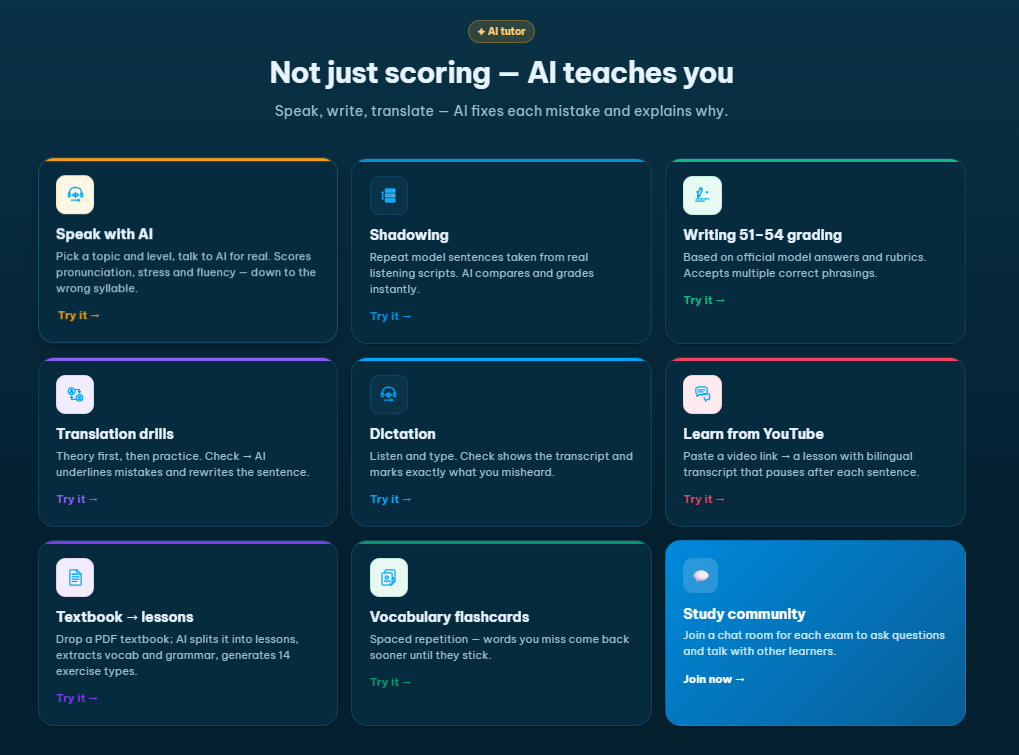
What if you want to practice Korean every day but do not have a conversation partner? DamiStudy helps Korean learners explore AI-assisted listening and speaking practice online. Instead of limiting your learning to textbooks and grammar exercises, you can use AI-assisted practice as an additional way to work on your communication skills. Depending on the features available on DamiStudy, you can use AI learning tools to support activities such as: Practice Korean Conversations Practice responding to questions and using common Korean expressions in everyday situations. Develop Your Speaking Reflexes Get more opportunities to formulate answers in Korean instead of translating every sentence from your native language. Improve Your Listening Skills Combine listening exercises with repeated practice to become more familiar with Korean pronunciation and spoken expressions. Practice at Your Own Pace Start with simple expressions and gradually move toward more challenging conversations as your skills develop. Build a Consistent Learning Habit Practice at a convenient time and incorporate Korean into your daily routine. AI is not a complete replacement for teachers or real conversations with native speakers. However, it can be a useful learning companion that provides additional opportunities to practice. If your goal is to move beyond memorizing Korean vocabulary and start using the language more actively, regular listening and speaking practice is an important step.
Explore Korean learning and AI practice tools →
4. A 20-Minute Daily Korean Speaking Practice Routine
You do not need several hours a day to begin building a more consistent Korean learning habit. Try this simple 20-minute routine. Minutes 1–5: Review vocabulary Review useful words and sentence patterns from your previous lesson. Minutes 6–10: Practice listening Listen to a short Korean conversation and identify the words and expressions you recognize. Minutes 11–15: Repeat sentences aloud Listen again and imitate the speaker's pronunciation, rhythm, and intonation. Minutes 16–20: Practice speaking with AI Answer questions in Korean, practice a short dialogue, or describe your day using the vocabulary you have learned. At the end of each session, write down one thing you did well and one thing you want to improve. Keep practicing consistently and adjust the difficulty as you become more comfortable.
5. Frequently Asked Questions About Korean Listening and Speaking
Why can I read Korean but not understand spoken Korean?
Reading and listening require different skills. You may recognize written vocabulary without being familiar with how those words sound in natural speech. Regular listening practice can help you connect written words with their pronunciation.
How can I improve my Korean listening skills?
Listen to short Korean conversations regularly. Repeat difficult sections, check the transcript when available, and listen again. Gradually practice with different speakers and speaking speeds.
Can I practice speaking Korean with AI as a beginner?
Yes. Beginners can start with greetings, self-introductions, basic questions, and everyday expressions. Choose topics that match your level and increase the difficulty gradually.
Is AI Korean speaking practice useful?
AI-assisted practice can provide additional opportunities to answer questions, rehearse conversations, and develop a consistent learning habit. Its effectiveness depends on the tools available and how regularly you use them. Combining AI practice with authentic listening materials and conversations with real people can provide a more balanced learning experience.
How long should I practice Korean every day?
Start with 15–20 minutes a day if that fits your schedule. Focus on regular listening, repeating sentences, and speaking actively. You can increase your practice time as your routine becomes more established.
Should I learn more vocabulary or practice speaking Korean?
Both are important. However, learning vocabulary without using it can make it difficult to recall words during conversations. Try to use new vocabulary immediately in sentences, listening exercises, and speaking practice.
If you have studied Korean for a long time but still cannot understand native speakers or speak confidently, you may need more opportunities to use the language actively. Do not wait until you know every grammar rule or memorize every word before starting to speak. Listen to Korean every day. Repeat useful expressions. Answer questions aloud. Practice conversations and learn from your mistakes. Small, consistent steps can help you build a stronger foundation for Korean communication. Ready to take the next step in your Korean learning journey?
Conclusion: Stop Only Studying Korean and Start Practicing It
Explore Korean learning resources and AI-assisted practice →