
EPS-TOPIK Vocabulary: Essential Korean Words for the EPS-TOPIK Exam
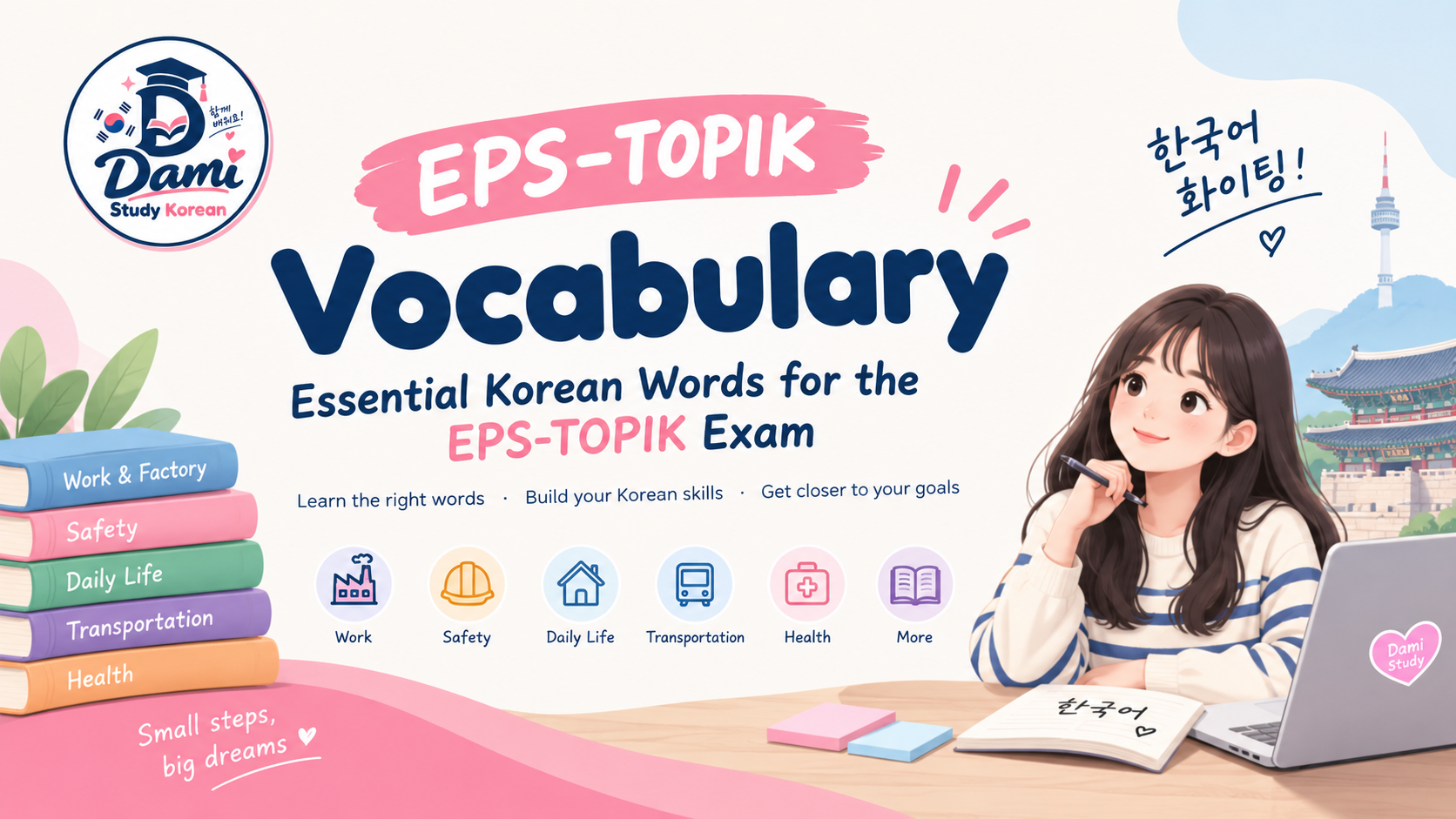
If you are preparing for the EPS-TOPIK exam and want to work in South Korea, learning Korean vocabulary should be one of your top priorities. EPS-TOPIK is different from learning Korean only for travel or casual conversation. The exam focuses on Korean used in everyday life and real workplace situations, including factories, construction sites, agriculture, transportation, safety, health, and daily activities. For English-speaking learners, learning Korean vocabulary can feel difficult at first. However, studying words by topic and practicing them in real Korean sentences can make the process much easier. This guide introduces essential EPS-TOPIK vocabulary and shows you how to study Korean words more effectively.
What Is EPS-TOPIK?
EPS-TOPIK stands for Employment Permit System – Test of Proficiency in Korean. It is a Korean language test used in connection with South Korea's Employment Permit System (EPS), which allows eligible foreign workers to work in Korea. The Korean you need for EPS-TOPIK is practical Korean. You should be able to understand common words and expressions used in: Workplaces Factories Agriculture Construction Transportation Safety instructions Health and medical situations Shopping Housing Everyday life This means that memorizing random Korean vocabulary is not the most effective way to prepare. Instead, learn vocabulary by topic and in context.
1. Korean Vocabulary for Work
Work-related vocabulary is one of the most important areas for EPS-TOPIK preparation
| Korean | English |
|---|---|
| 일 | work |
| 회사 | company |
| 공장 | factory |
| 근무 | work / duty |
| 출근하다 | to go to work |
| 퇴근하다 | to leave work |
| 일하다 | to work |
| 직원 | employee |
| 근로자 | worker |
| 사장님 | boss / owner |
| 동료 | coworker |
| 작업 | work / task |
| 작업장 | workplace |
| 생산 | production |
| 생산하다 | to produce |
| 검사 | inspection |
| 포장 | packaging |
| 정리하다 | to organize |
| 청소하다 | to clean |
Example sentences
공장에서 일합니다. I work at a factory. 아침 8시에 출근합니다. I go to work at 8 a.m. 퇴근 후에 집에 갑니다. I go home after work.
2. Factory and Manufacturing Vocabulary
If you plan to work in a Korean factory, manufacturing vocabulary is especially useful.
| Korean | English |
|---|---|
| 공장 | factory |
| 기계 | machine |
| 제품 | product |
| 부품 | part / component |
| 재료 | material |
| 생산 | production |
| 포장 | packaging |
| 조립 | assembly |
| 운반 | transportation / carrying |
| 창고 | warehouse |
| 상자 | box |
| 도구 | tool |
| 장비 | equipment |
| 고장 | breakdown / malfunction |
| 수리 | repair |
| 확인하다 | to check / confirm |
| 사용하다 | to use |
Example sentences
기계를 사용합니다. I use the machine. 제품을 포장합니다. I package the products. 기계가 고장 났습니다. The machine has broken down.
3. Korean Safety Vocabulary
Safety vocabulary is another important part of practical Korean. You may encounter safety signs and instructions at Korean workplaces.
| Korean | English |
|---|---|
| 안전 | safety |
| 위험 | danger |
| 조심하다 | to be careful |
| 주의하다 | to pay attention / be cautious |
| 사고 | accident |
| 안전모 | safety helmet |
| 안전화 | safety shoes |
| 장갑 | gloves |
| 보호복 | protective clothing |
| 마스크 | mask |
| 금지 | prohibition |
| 금연 | no smoking |
| 출입 금지 | no entry |
| 위험하다 | to be dangerous |
| 다치다 | to get injured |
Useful expressions
안전모를 쓰세요. Please wear a safety helmet. 여기는 위험합니다. This area is dangerous. 조심하세요. Be careful. 출입 금지입니다. No entry.
4. Time and Schedule Vocabulary
Time expressions are common in everyday Korean and are useful for EPS-TOPIK.
| Korean | English |
|---|---|
| 오늘 | today |
| 어제 | yesterday |
| 내일 | tomorrow |
| 지금 | now |
| 아침 | morning |
| 점심 | lunch / noon |
| 저녁 | evening |
| 오전 | morning / AM |
| 오후 | afternoon / PM |
| 시간 | time / hour |
| 하루 | one day |
| 주 | week |
| 월 | month |
| 년 | year |
| 일찍 | early |
| 늦게 | late |
| 먼저 | first / before |
| 나중에 | later |
Example sentences
오늘은 일합니다. I work today. 내일은 쉽니다. I have the day off tomorrow. 오전에 일하고 오후에 공부합니다. I work in the morning and study in the afternoon.
5. Everyday Korean Vocabulary
EPS-TOPIK is not only about the workplace. You also need Korean vocabulary for everyday situations.
| Korean | English |
|---|---|
| 집 | home / house |
| 방 | room |
| 부엌 | kitchen |
| 화장실 | bathroom |
| 식당 | restaurant |
| 시장 | market |
| 병원 | hospital |
| 약국 | pharmacy |
| 은행 | bank |
| 우체국 | post office |
| 학교 | school |
| 기숙사 | dormitory |
| 슈퍼마켓 | supermarket |
| 편의점 | convenience store |
Example sentences
기숙사에서 생활합니다. I live in a dormitory. 병원에 갑니다. I go to the hospital. 시장에 가서 물건을 삽니다. I go to the market and buy things.
6. Essential Korean Verbs for EPS-TOPIK
Do not focus only on nouns. Korean verbs are extremely important because they help you understand complete sentences in both reading and listening questions.
| Korean | English |
|---|---|
| 가다 | to go |
| 오다 | to come |
| 먹다 | to eat |
| 마시다 | to drink |
| 자다 | to sleep |
| 일어나다 | to get up |
| 일하다 | to work |
| 공부하다 | to study |
| 배우다 | to learn |
| 쓰다 | to write / use |
| 읽다 | to read |
| 듣다 | to listen |
| 보다 | to see / watch |
| 사다 | to buy |
| 팔다 | to sell |
| 만들다 | to make |
| 사용하다 | to use |
| 확인하다 | to check |
| 준비하다 | to prepare |
| 시작하다 | to start |
| 끝나다 | to finish / end |
| 기다리다 | to wait |
| 찾다 | to find / look for |
| 보내다 | to send |
| 받다 | to receive |
Example
오늘 한국어를 공부합니다. I study Korean today. 기계를 확인합니다. I check the machine. 작업을 시작합니다. I start the work.
7. Transportation Vocabulary
Knowing transportation vocabulary will help you understand everyday situations in Korea.
| Korean | English |
|---|---|
| 버스 | bus |
| 지하철 | subway |
| 택시 | taxi |
| 자동차 | car |
| 자전거 | bicycle |
| 기차 | train |
| 정류장 | bus stop |
| 역 | station |
| 길 | road / way |
| 신호등 | traffic light |
| 건너다 | to cross |
| 타다 | to ride / get on |
| 내리다 | to get off |
| 왼쪽 | left |
| 오른쪽 | right |
| 앞 | front |
| 뒤 | back |
Example sentences
버스를 타고 회사에 갑니다. I take the bus to work. 다음 정류장에서 내리세요. Please get off at the next stop. 왼쪽으로 가세요. Go to the left.
8. Health and Medical Vocabulary
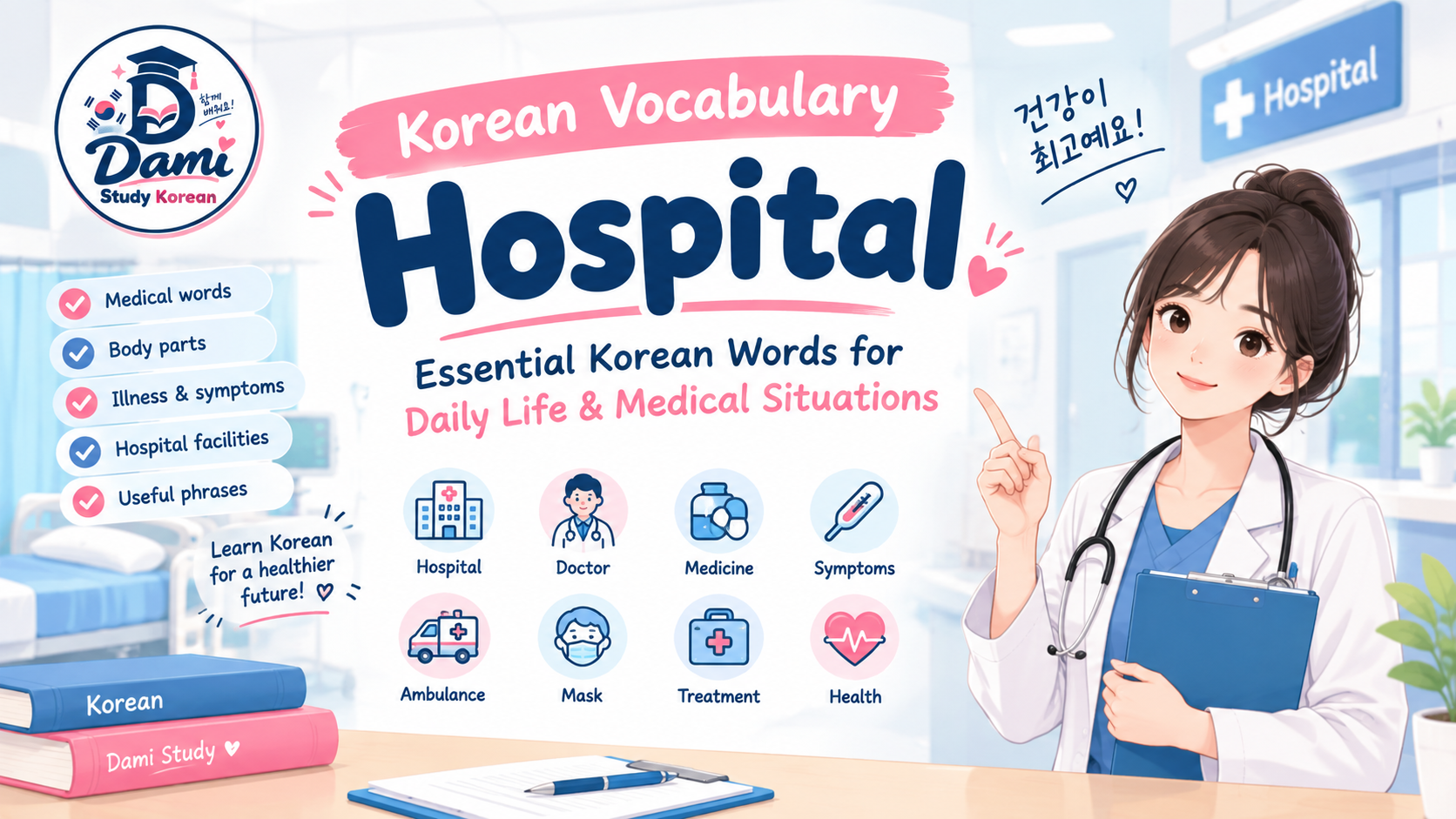
Health-related vocabulary can also appear in practical Korean situations.
| Korean | English |
|---|---|
| 건강 | health |
| 병 | illness / disease |
| 아프다 | to hurt / be sick |
| 감기 | cold |
| 머리 | head |
| 눈 | eye |
| 귀 | ear |
| 코 | nose |
| 입 | mouth |
| 입 | hand |
| 발 | foot |
| 병원 | hospital |
| 의사 | doctor |
| 약 | medicine |
| 치료 | treatment |
| 쉬다 | to rest |
Example sentences
머리가 아파요. I have a headache. 병원에 가야 합니다. I have to go to the hospital. 오늘은 쉬세요. Please rest today
9. How to Study EPS-TOPIK Vocabulary
Simply memorizing a long list of Korean words is not enough. A better approach is to learn vocabulary through meaning, pronunciation, context, and repetition.
Step 1: Study by topic
Choose one topic at a time. For example: Day 1: Work Day 2: Factory and manufacturing Day 3: Workplace safety Day 4: Transportation Day 5: Everyday life Day 6: Health Day 7: Review This makes it easier to connect related words.
Step 2: Learn words with sentences
Instead of memorizing: 공장 = factory learn the word in a sentence: 공장에서 일합니다. I work at a factory. This helps you understand how the word is actually used.
Step 3: Practice listening and pronunciation
EPS-TOPIK preparation should not be limited to reading. For each new word: Look → Listen → Repeat → Read → Practice For example: 안전모 Safety helmet Listen to the pronunciation, say the word aloud, and then practice it in a sentence.
Step 4: Review regularly
Try reviewing vocabulary several times instead of studying it only once. A simple review schedule can be: Day 1 → Day 2 → Day 4 → Day 7 → Day 14 → Day 30 Regular review helps you remember vocabulary for longer.
10. Practice EPS-TOPIK Vocabulary With Questions
After learning new words, test yourself with short questions. For example: 안전모를 ________. ① 먹습니다 ② 씁니다 ③ 마십니다 ④ 잡니다 Answer: ② 씁니다 안전모를 씁니다. I wear a safety helmet. This type of practice helps you understand not only the meaning of a word but also how it works in a Korean sentence.
11. How Many Korean Words Do You Need for EPS-TOPIK?
There is no need to focus only on reaching a specific vocabulary number. What matters is whether you can: • Recognize Korean words when you hear them • Understand words in sentences • Read common workplace vocabulary • Understand safety instructions • Recognize everyday expressions • Distinguish words with similar meanings • Use basic Korean verbs and expressions Quality and context are more important than simply memorizing a huge vocabulary list.
12. Build Your EPS-TOPIK Vocabulary Step by Step
If you are a beginner, don't try to memorize hundreds of words in one day. Start with the most practical vocabulary. Beginner level Learn: • Basic verbs • Numbers • Time • Days and dates • Family • Food • Transportation • Places Intermediate EPS vocabulary Then focus on: • Workplace vocabulary • Factory vocabulary • Tools and equipment • Production • Safety • Instructions • Health • Workplace communication Exam preparation Finally, combine vocabulary study with: • Korean reading practice • Korean listening practice • Vocabulary quizzes • EPS-TOPIK mock tests • Realistic workplace situations
Start Learning Korean for EPS-TOPIK
Building your Korean vocabulary is one of the first steps toward preparing for EPS-TOPIK. Don't try to memorize random words. Learn Korean by topic, in context, and through regular practice. A good study routine combines: Vocabulary → Sentences → Listening → Reading → Practice → Mock Tests If you are preparing to work in South Korea, start building your Korean foundation today and gradually move toward EPS-TOPIK practice. Ready to practice?